
Books
Mega-Glam Girl and The Laundromat of Doom
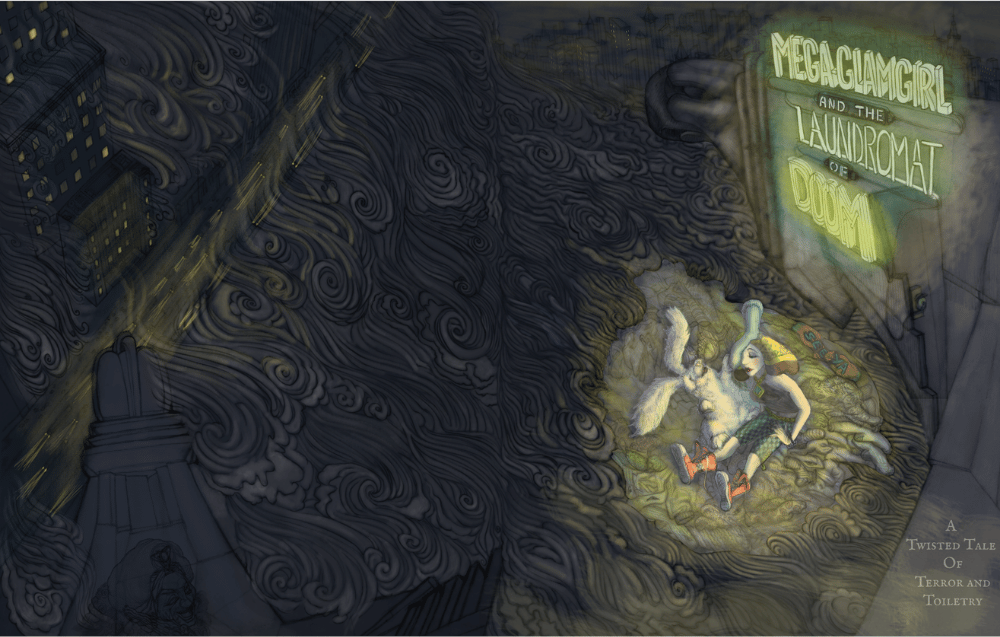
Mega-Glam Girl and The Laundromat of Doom (409 words) is a twisted tale of terror and toiletry—about a girl eaten alive by laundry—unlike most pic books, which are written for 3-8 year olds, this is for YA readers, a genre-bender like Go the F*ck to Sleep by Adam Mansbach (no profanity here though) and other pic books for older readers.
This is a nonsensical story—an illustrated extravaganza with creepy art—inspired by the poetry of Edward Lear and the DaDa philosophy which says life has no meaning; the unspeakable beauty of the Chrysler building, where the story is set; and the beauty and romance of Art Deco, the moon, Fred Astaire, dancing rats, and flirting with terpsichore.
Mega-glam girl, age 14, lives in the top of the Chrysler Building in New York City. She's an extremely normal teen, meaning she's overly preoccupied with how she looks. She considers herself super sharp in style, and she's a bit snobby. She's also a bit spoiled and never keeps her room tidy. In fact, her bedroom is a disaster.
Mega avoids all responsibilities when it comes to household chores, which she considers beneath her. She's also easily irritated—especially by her rabbit sidekick, Bun Bun, who delights in her suffering. He hates how Mega's bedroom always stinks, and how he's often trapped by her various articles of clothing, including her underwear!
Will they survive the Laundromat of Doom?
The Perils of Fifi La Pooshe
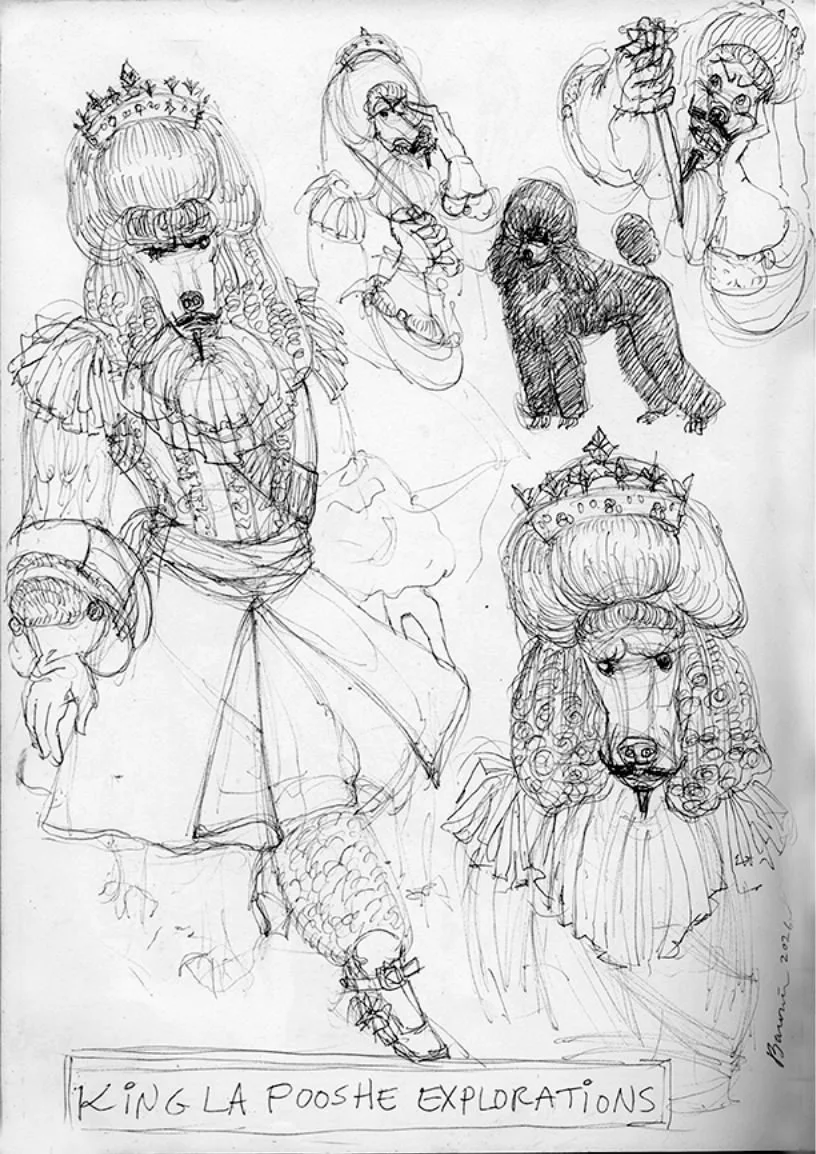
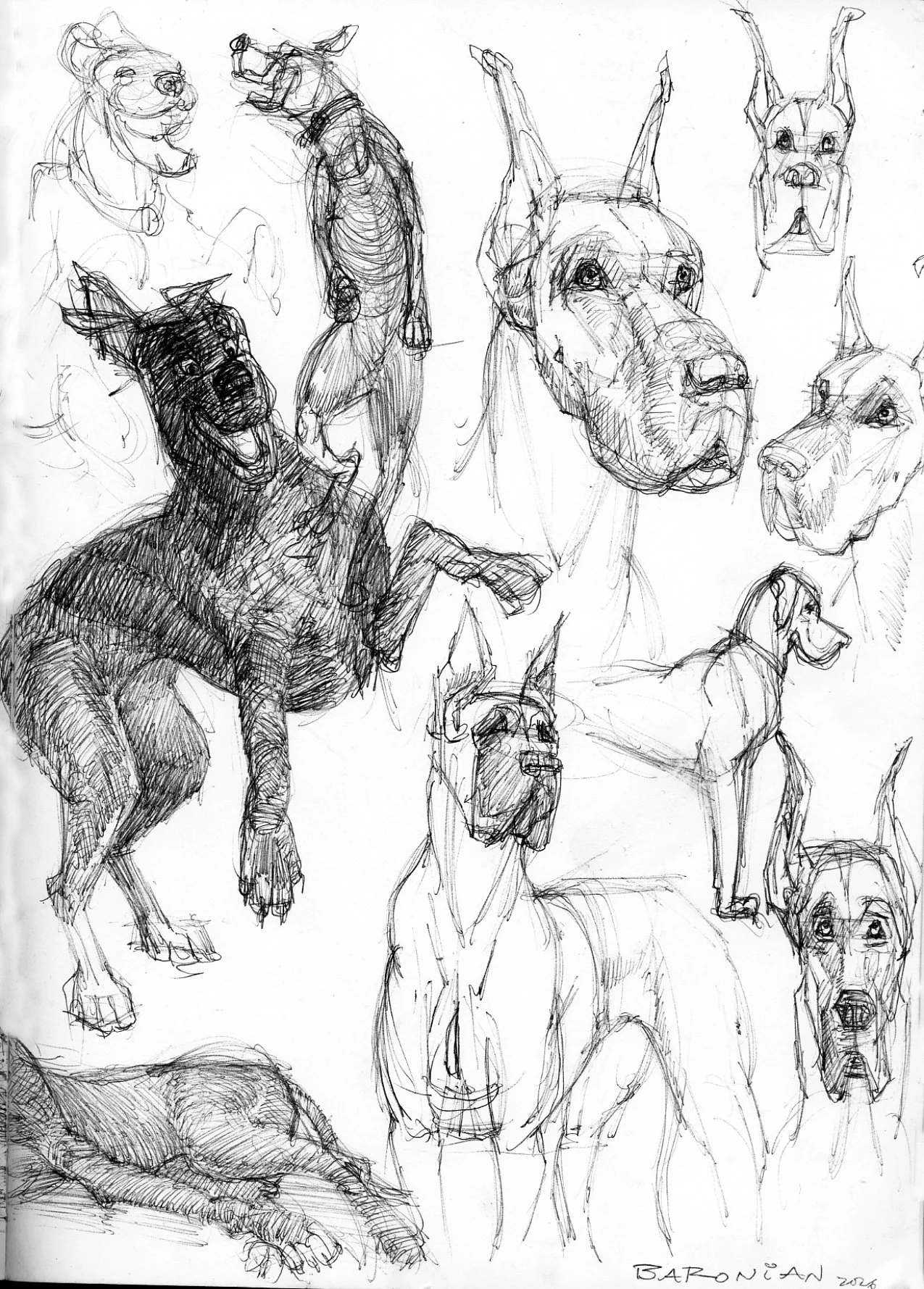
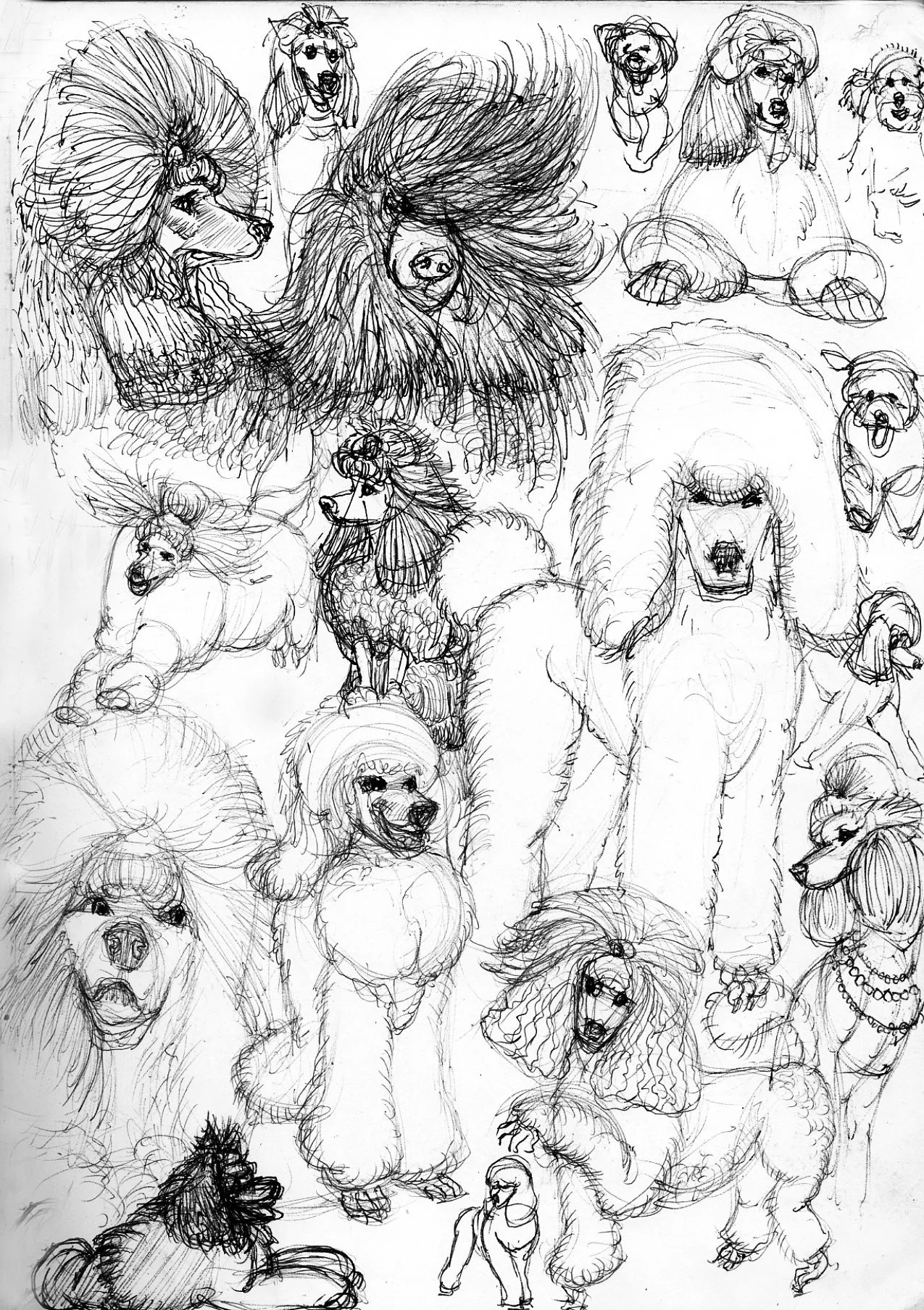
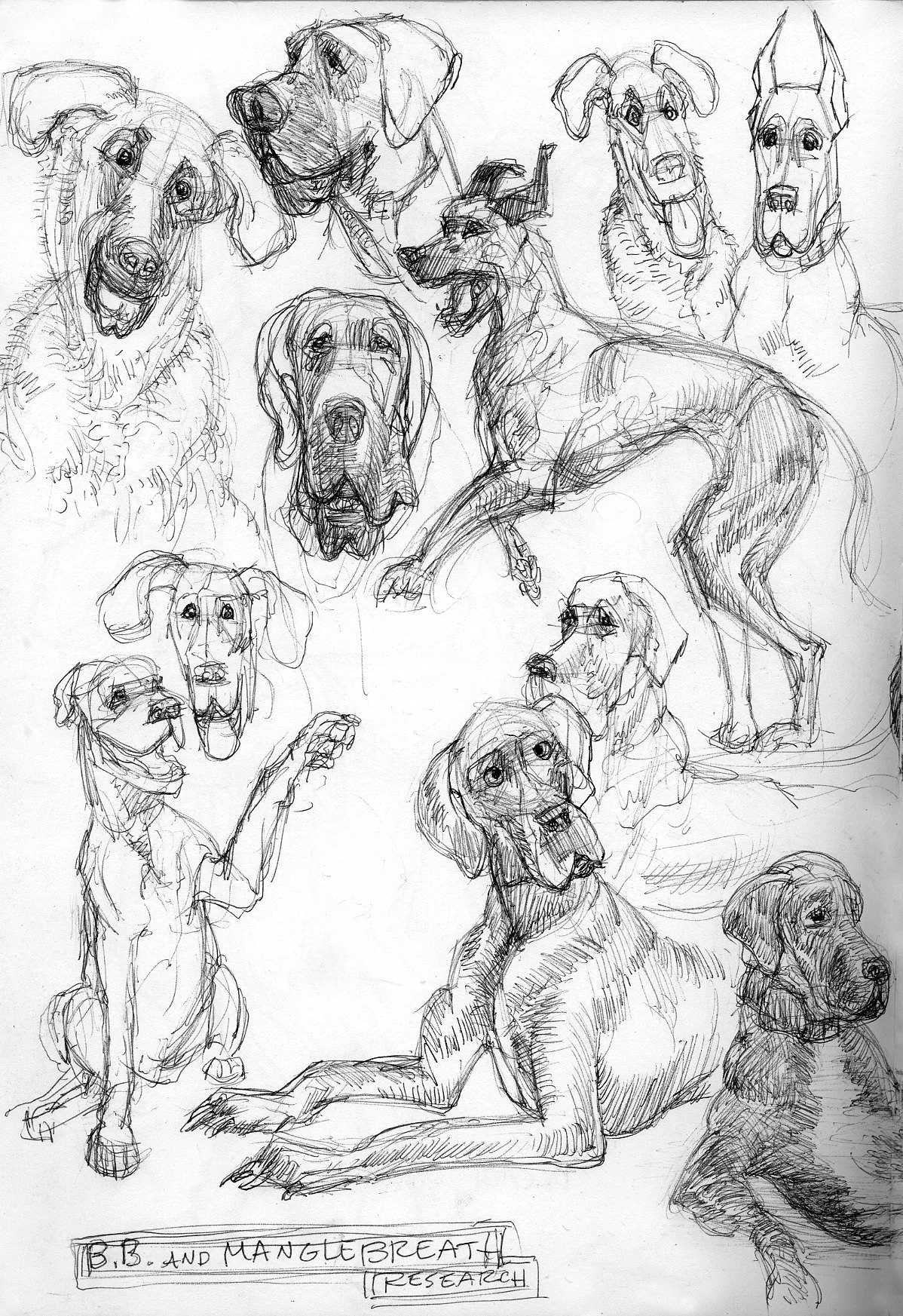
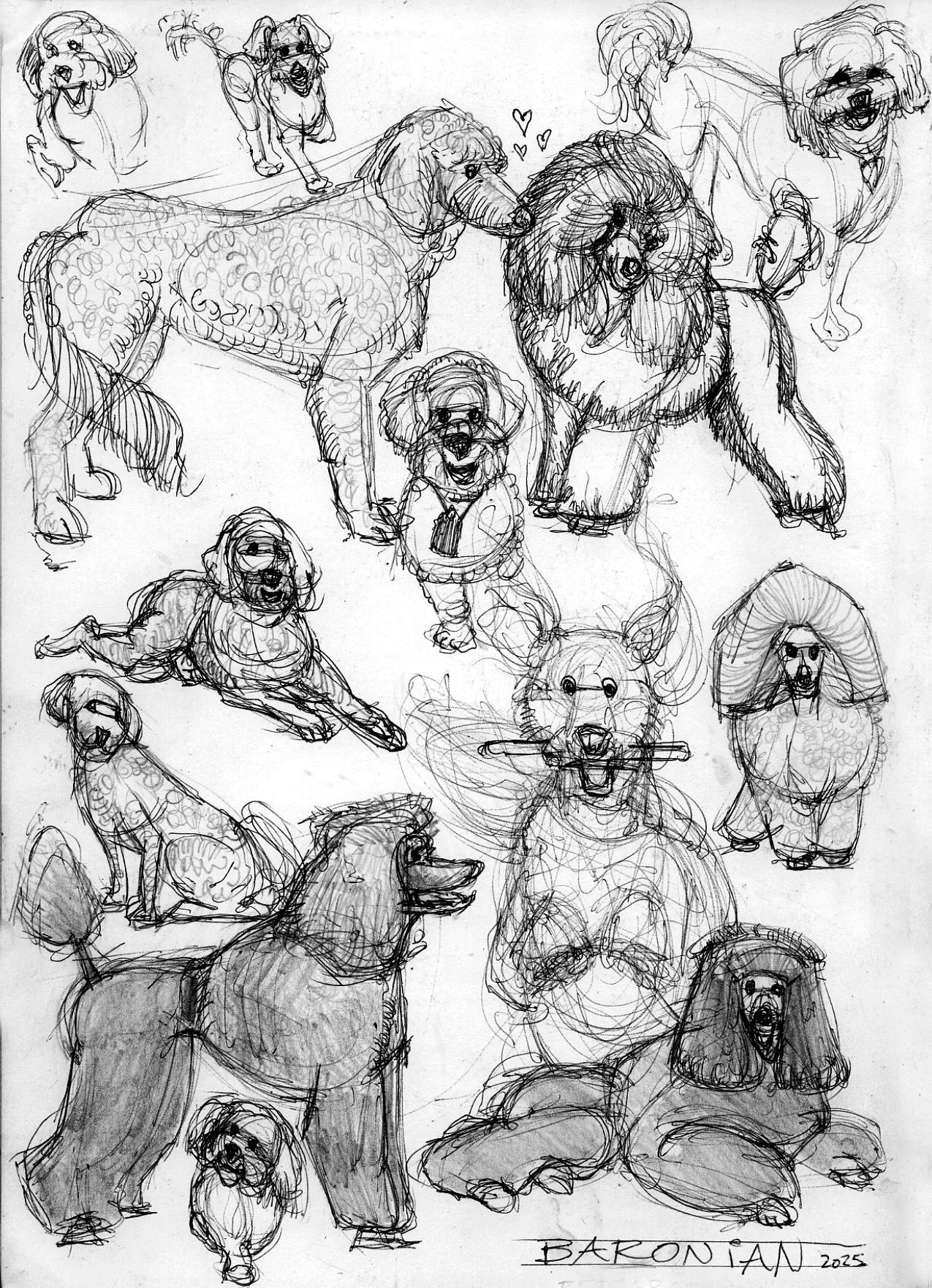
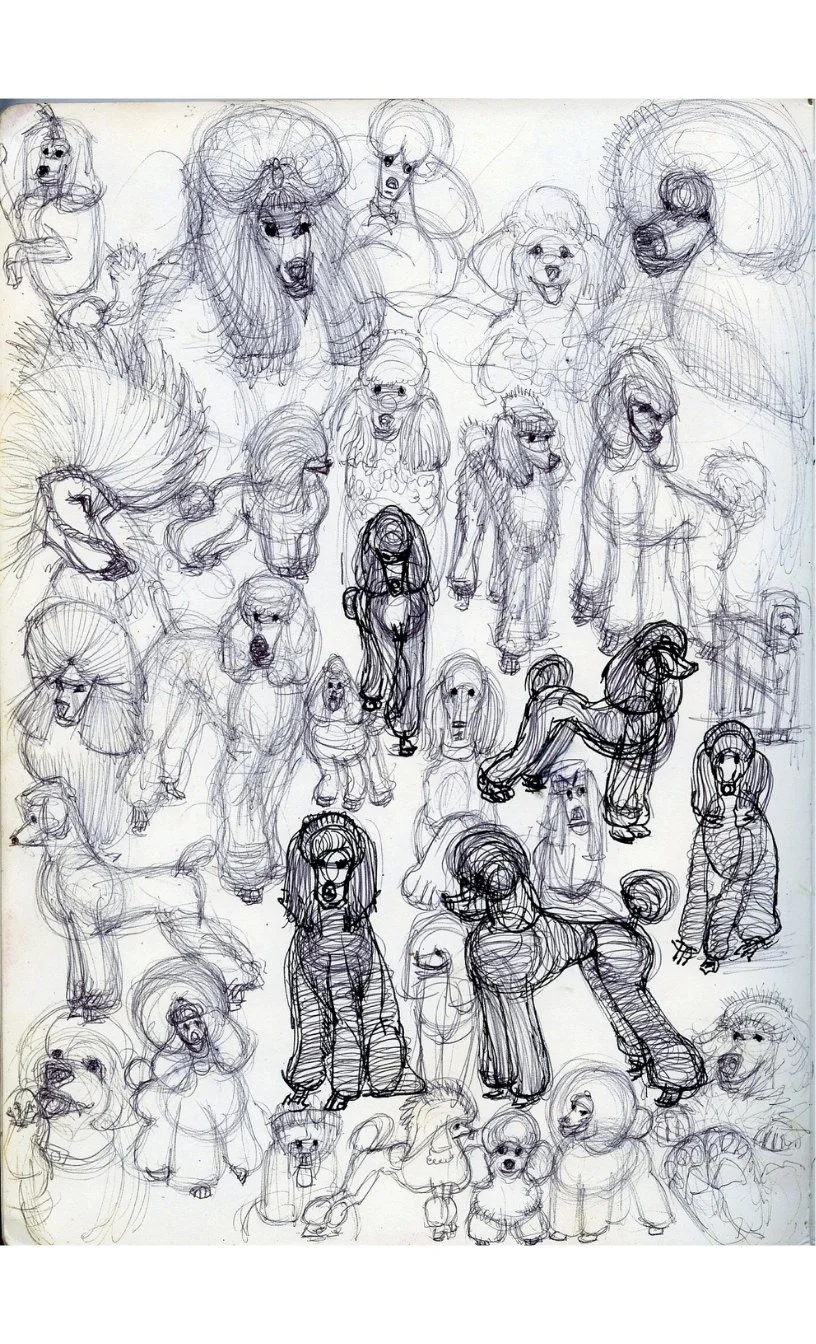
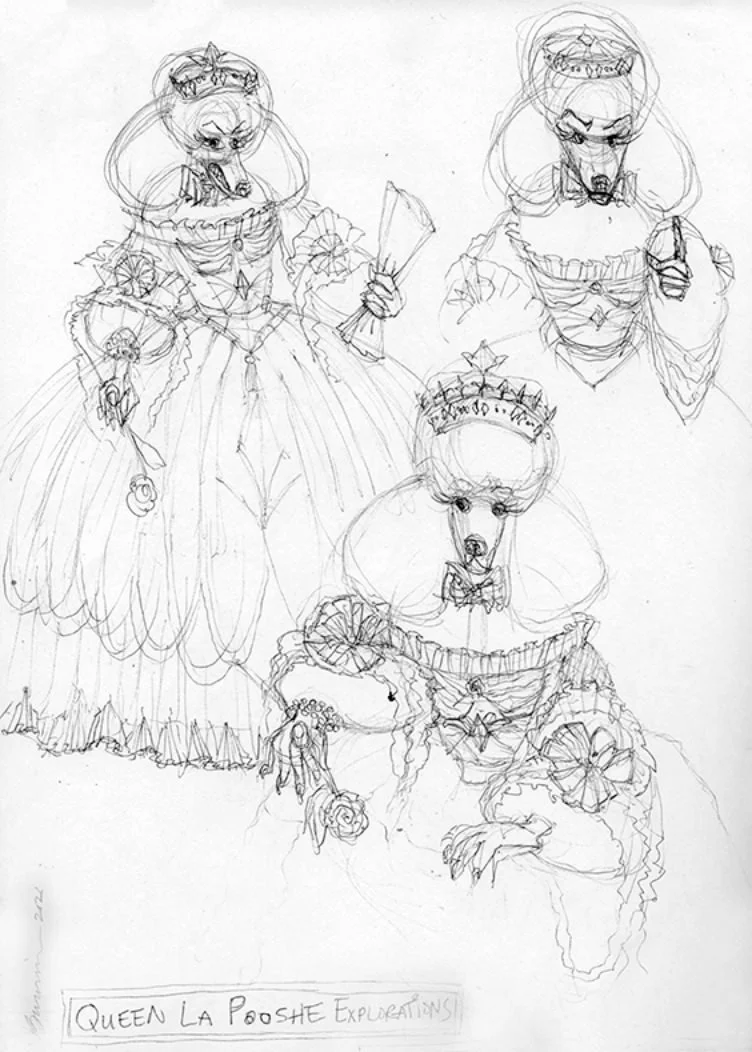
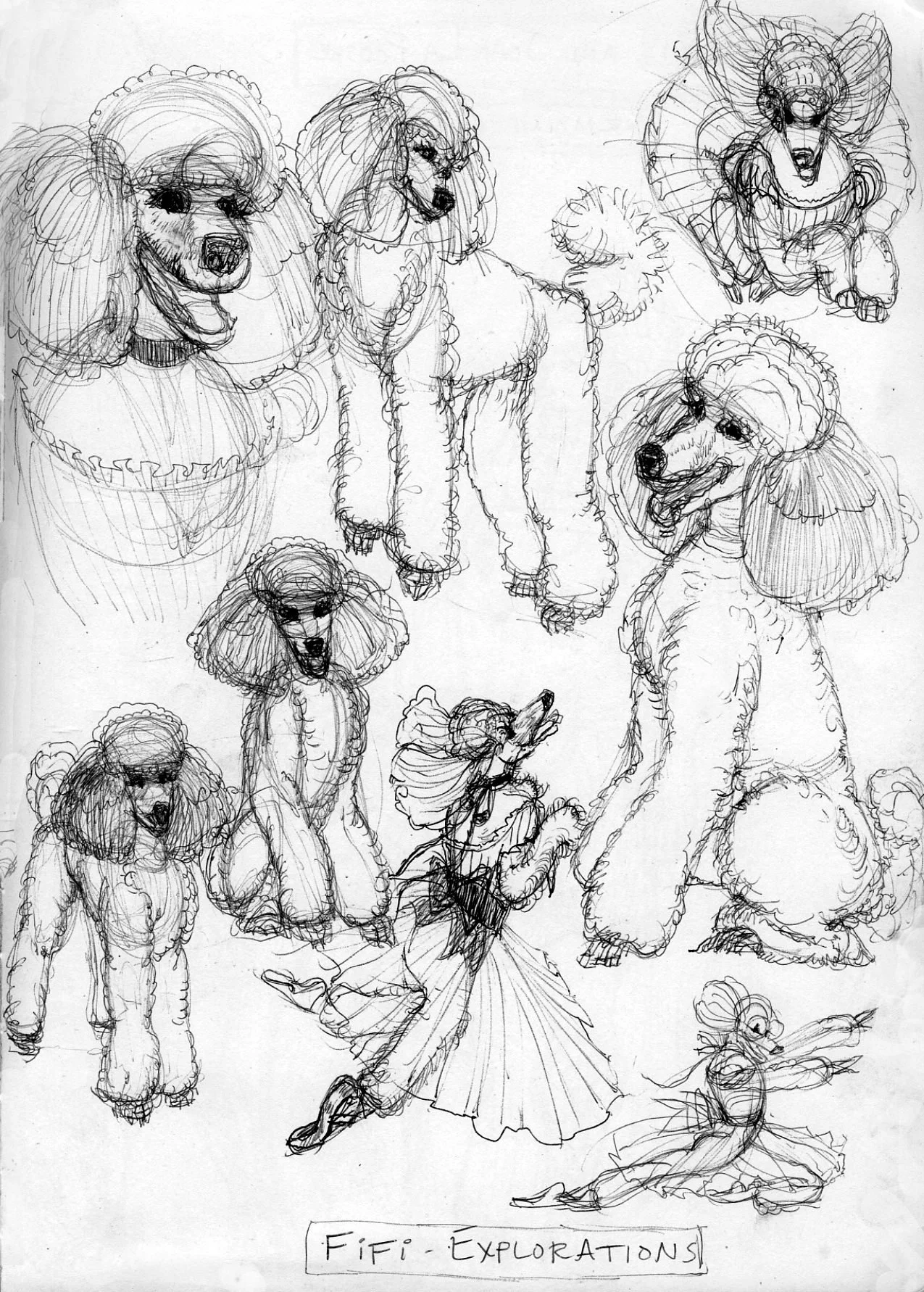
The Perils of Fifi La Pooshe (55k words) is a fantastical middle-grade novel set in 1874 France , where dogs hold the moral high ground, featuring a runaway canine princess who cares more about pirouettes than palace protocol; after fleeing an assassination attempt she lands in artist-crowded Paris, where she must claw her way from frightened fugitive to fearless ballerina general, rallying dancers and defiant painters to stand up to cruel masters and powerful critics—and prove that even the smallest paws can lead a revolution for art, justice, and joy.
Fifi La Pooshe has everything a royal dog could want: silk cushions, perfect pastries, and parents who rule over every hound in France from the glittering halls of Versailles. What she doesn’t have is courage—at least, that’s what she believes—until the king and queen leave for a distant coronation and their daughter is left behind with Scythe, a shadowy butler whose “caretaking” nearly costs Fifi her life. She bolts for Paris with nothing but her training in classical dance and a strange egg she wins from a riddle-loving sphinx.
Daring female painter Mademoiselle “Boots” Pamplemousse takes Fifi in, and she shares a rickety loft with four painters—Monet, Degas, Delacroix, and Renoir—mocked for refusing to paint the way the Academy demands. As Fifi juggles street performances, harsh ballet rehearsals at the Palais Garnier, and the fact that dancers are being pushed past their limits, she must decide if she’s a pampered princess hiding in the wings…or a leader willing to march, in pointe shoes and borrowed ancestral armor, for every artist who’s ever been told to stay in line.
Fifi is for fans of Kate DiCamillo’s The Tale of Despereaux, which features a small, unlikely hero in an old-world European setting questioning what courage truly is; Noel Streatfeild’s Ballet Shoes, which dives into the grind and glory of the stage, and the question of who gets to define “talent” and “success;” and historical adventures such as The Inquisitor’s Tale and The Miraculous Journey of Edward Tulane, with whimsical premises, rich atmosphere, and big moral questions about kindness, cruelty, and becoming one’s truest self.
What makes Fifi special is the frame her story uses: Impressionist Paris and the ballet world, seen through the eyes of a royal poodle who grows from pampered princess to nonviolent movement leader. Instead of just using “Paris” as pretty wallpaper, the book engages with the real historical clash between the Impressionists and the Salon—the way an entire culture tried to crush a new way of seeing—and translates that into a kid-friendly question: How do you keep believing in your originality when everyone says you’re wrong?